‘Ancient Egypt: A History in Biography’ with Dr Aidan Dodson of Bristol University and the Kemet Klub, Bristol.

We are so lucky to have Aidan Dodson living and working in our area and therefore, available to talk to us; and this was another interesting, informative and enjoyable day –  arranged by Ali and the Kemet Klub in Bristol.

Aidan took us on a journey through Egyptian history via the prism of some of the kings, nobles, priests and artisans who shaped it – by looking at what can, and has been gleaned from the writings of various individuals of their day and how this has informed the world of Egyptology.

Rahotep - 4th Dynasty - Cairo MuseumTravelling through more than 3000 years of the ancient culture, from the unification of Egypt to its fall to the Roman Empire of the late first millennium, we were taken through what is known about some of these individuals, and the process we looked at some of the greatest works of art of the time.  It was a really good day, and with a different approach to the subject.

And as always with Ali and the committee of the Kemet Klub we were well looked after and provided with yummy teas and cakes.  Thanks everyone, I look forward to the next course.

Posted in Dr. Aidan Dodson, The Kemet Klub, University of Bristol | Comments Off on ‘Ancient Egypt: A History in Biography’ with Dr Aidan Dodson of Bristol University and the Kemet Klub, Bristol.

The Third Intermediate Period – Dr. Aidan Dodson, Bristol University

This lecture was held in Exeter, in conjunction with DAS Exeter, and it was well worth the trip.  For this lecture, Dr. Aidan Dodson talked on the complex and somewhat confusing period between the end of the New Kingdom and the Saite Renaissance.

It was a time of fracture, disruption, and foreign powers in Egypt.  High-priests became dominant in Upper Egypt, ruling from Thebes, along with the God’s Wives of Amun.
Whilst in the North at Tanis, various Princes & Generals, amongst them Shoshonk, Takelot & Osorkon, vied for rulership.

Aidan told of a possible Civil War between the two Kingdoms, and how c.790 BCE relative peace came under Osorkon lll who ruled for 10 years.  Towards the end of the period as Egypt was again falling apart, Nubians came from the South; eventually ruling from Thebes, before being driven back to Nubia.  Finally, c. 655 BCE saw reunification of North & South under Psamtik I.

It was a time of constant change and challenge – as was the lecture.  But Aidan managed to piece it all together and made it flow in an interesting and comprehensible way.

Thanks Aidan – I look forward to your next lecture.

Posted in Devon Archaeological Society - Exeter, Dr. Aidan Dodson, Egypt Society of Bristol, University of Bristol | Comments Off on The Third Intermediate Period – Dr. Aidan Dodson, Bristol University

‘Nefertiti – Ancient Egypt’s Most Intriguing Queen’ – Lucia Gahlin

Once again, I have lucky to attend another of Lucia’s talks – this one on the beautiful, 18th Dynasty, Queen Nefertiti.

Nefertiti_berlinLucia brought a new slant and new information to the subject of this enigmatic queen.
The talk covered much: the history behind Queen Nefertiti and her husband Akhenaten; the disruption and politics of their reign, and their decline and downfall.
But in addition, Lucia covered the story of how the wonderful, iconic bust of Nefertiti came to be in Berlin and not in Egypt as might be expected – it was so interesting and informative.

Another great talk in the lovely setting of Dillington House.

Thanks again Lucia

Posted in Dillington House, Lucia Gahlin, University College of London - UCL | Comments Off on ‘Nefertiti – Ancient Egypt’s Most Intriguing Queen’ – Lucia Gahlin

‘The Pharaoh in Ancient Egypt’  – Lucia Gahlin  of UCL and the Kemet Klub, Bristol

During the most enjoyable four weeks of ‘ The Pharaoh in Ancient Egypt’ we covered so much:  from the young princes and Pharoahs-to-be and their life in the palaces:  their education and training, their hunting, play and playmates, and even their wet-nurses.  And who and which of the princes might or might not become pharaohs and the reasons for this.

We heard about life as they grew, and the growing expectations on them – and then we focused on the life of a pharaoh in ancient Egypt:

Window of ApperancesLucia covered royal titulary – and I loved learning about the courtly ritual and audiences in the palaces with the king, royal public appearances and parades, ceremonies, pharaoh duties and demands of them, and their relationship and interaction with the gods as part of the renewal of their divine responsibilities.

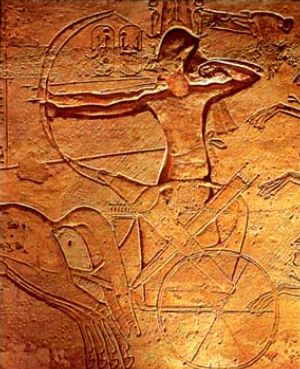
Ramses_II_at_KadeshAnd, of course, we heard about battles – a big deal to the Pharaohs – it being their duty to protect the land and its people.  We learned what military training they undertook: archery and other means of fighting.  And from the 18th dynasty onwards – charioteering and horsemanship; and the resultant displays of pharaonic might in battle – and the truth – or not – that was of the inevitable show of victory in the royal propaganda.

As always with Lucia and the Kemet Klub – it proved to be a most enjoyable and informative course.  Thanks yet again Lucia and the lovely Kemet Klub

Posted in Lucia Gahlin, The Kemet Klub, University College of London - UCL | Comments Off on ‘The Pharaoh in Ancient Egypt’  – Lucia Gahlin  of UCL and the Kemet Klub, Bristol

Warfare and Weapons in Ancient Egypt – Manchester University

university-1I have just finished the above excellent on-line course and achieved my ‘Certificate of Completion: Warfare and Weapons in Ancient Egypt’

It is the last of three such on-line courses I have completed through the university, and was just as enjoyable and informative as the others.

As the title indicates, it is about warfare and it focused on the mighty 18th and 19th dynasties – which I guess, is not surprising.  We looked a coastal and border fortifications, invaders – the Libyan, Sea Peoples etc.

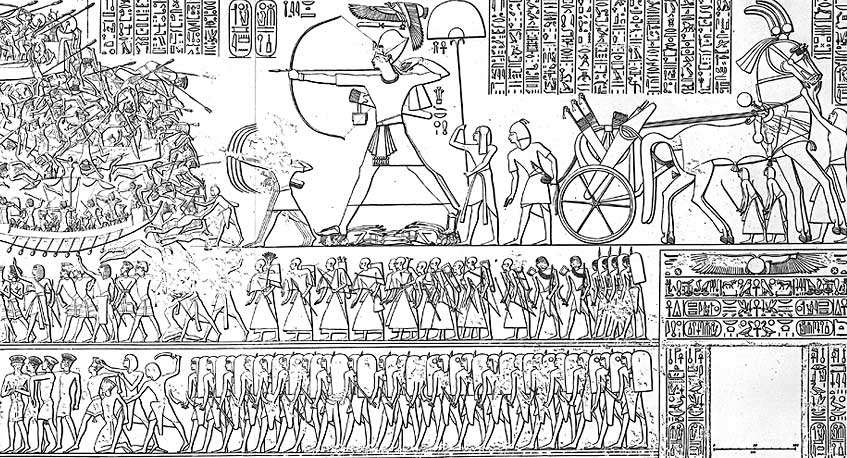
And, as you would expect, battles – not least, the Battle of Kadesh and defeating the Sea Peoples.

As always, there were video lectures, downloads, activities and quizzes – all of which had to be completed to earn the certificate.

They are really well-run and enjoyable courses, and I wish there were more.  Thank you Joyce Tyldesley,  Glenn Godenho, Campbell Price and their team.

To find out more: http://www.egyptologyonline.ls.manchester.ac.uk/tastercourses/

Posted in Dr. Joyce Tyldesley, Universities, University of Manchester | Comments Off on Warfare and Weapons in Ancient Egypt – Manchester University

Immortal Egypt: BBC Two – by Prof. Joann Fletcher – University of York

bbc-blocks-lightI just have to write something about this wonderful four-part series that Prof. Joann Fletcher of York University was recently on BBC Two.

It was simply and utterly wonderful!  Joann began with North Africa’s earliest rock art at Qurta, moved onto the ancient nomadic culture of Ancient Egypt, to Pre-dynastic and early dynastic times, to the pyramids and their builders, writing, tomb robberies, taxes, the glorious New Kingdom and through to the last of the pharaohs.   In the four programs, Joann took the viewer as easily through the history of ancient Egypt as she appeared to move through the landscape of Egypt.

Joanne FletcherShe has a wonderful manner and is clearly as well-informed as you would expect such an experienced lecturer, publisher and broadcaster to be, yet she delivered this series in such a clear, understandable and entertaining way.  It was serious and yet enlightening, informative and very, very entertaining.

I don’t know if I have ever been more disappointed to see such a series come to an end.

The Story of EgyptHer book for the series is ‘The Story of Egypt’
I now have her book on the series ( – added to my already very crowded book shelf) and I love it!  Joanne writes very well, and it is an informative and very interesting read!
Thanks Joann – and when can we look forward to more?

Posted in Prof. Joann Fletcher, TV Broadcasts, University of York | Comments Off on Immortal Egypt: BBC Two – by Prof. Joann Fletcher – University of York

BLUE: Symposium Exploring Aspects of Life in Ancient Egypt

university-1This is another ‘taster’ course offered by Manchester University and Museum; and is the on-line equivalent of their February study day – and I cannot tell you how fascinating it proved to be!

We covered far more than just the colour blue; we looked at the colours that were available to the Ancient Egyptians, the symbolism they held for them, and the reasons why.  I learned about ‘Grue’ – those colours which span the blue/green spectrum.  I knew that blue and green were important colours to the ancient Egyptians; and now I understand why this was so.  We looked at faience and glass making;  we ‘felt blue’ via the Amarna Letters, and finally, we investigated the ushabi and other various artefacts.

Colours were not simply seen as we see them; for example the term for the colour green can also be used to mean ‘freshness’ – therefore, the word for green, could be used to mean fresh meat, whereas we would think of green meat as anything but fresh!

Green was a symbol of life and growth, and black was a symbol of the potential for life.  Red was associated with the desert – with dryness, aridity, the absence of life, the absence of the potential of life, so red could have rather negative connotations!

These are but a few of the fascinating insights of this course – and if you wish to learn more, just go the the Manchester Museum website (link above).

Colourfully yours, Jan

Posted in Dr. Joyce Tyldesley, University of Manchester | Comments Off on BLUE: Symposium Exploring Aspects of Life in Ancient Egypt

Ancient Egypt: A History in Six Objects – by Manchester University

I have just completed:  Ancient Egypt: A History in Six Objects – a course run by Manchester University:  university-1 – with Dr Joyce Tyldesley, Dr Glenn Godenho and Dr Campbell Price; where I achieved a Statement of Accomplishment’.

As part of the course, we had to produce our own Ancient Egypt: A History in Six Objects – this was fun and I enjoyed the process – and if you want to see more about my choices go to my own page Ancient Egypt in Six Objects

Posted in Dr. Joyce Tyldesley, Universities, University of Manchester | Comments Off on Ancient Egypt: A History in Six Objects – by Manchester University

Obelisks in the Eternal City: From Egypt to Italy – by Luigi Prada, Oxford University

This was a very interesting talk – a different take on the ‘pointed’ subject of obelisks – presented by the very engaging Luigi Prada from Oxford University.  Luigi had spoken to the Egyptian Society, Taunton before, and he is a good speaker, so I was looking forward to this talk.

He started by telling us that there are more Egyptian obelisks outside of Egypt than there are still in Egypt!  I found this quite shocking.

He discussed various obelisks: which pharaoh they belonged to, where they originated and where they are today – and the ‘hows and whys’of their removal from Egypt and to their new homes.

Luigi covered a lot of ground, and it was a most interesting talk by a good speaker.

Thanks Luigi – ‘points’ all round!

Posted in Egyptian Society Taunton, Luigi Prada - Oxford University, University of Oxford | Comments Off on Obelisks in the Eternal City: From Egypt to Italy – by Luigi Prada, Oxford University

Treasure of the Pharaohs; Ancient Egyptian Jewellery – Lucia Gahlin UCL

We at the Kemet Klub have just finished another pearl of a course presented by the sparkling Lucia on the dazzling glories of ‘Ancient Egyptian Jewellery’.

Lucia started with early jewellery making in ancient Egypt – revealing how very skilled were the early Egyptians, and what wonderful examples of amulets and personal adornment of gold, faience, silver, semi-precious stones have been found in early burials – including the world’s earliest known examples of worked iron – meteoric iron beads: Naqada ll – lll, c.3500 – 3100:

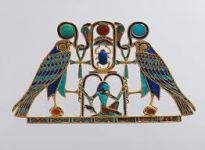
She movSithathororiune pectoraled through the ages; showing us many splendid and very beautiful examples; discussing the workmanship and symbolism of some the finest pieces.  Lucia spent time on the splendors of the Middle Kingdom.  I was utterly taken with this gorgeous, stunningly beautiful pectoral of Princess Sit–Hathor–yunet:  Tomb of Senusret ll at Lahun, c. 1887–1813 B.C.

Tutankhamun's pectoralLucia finished by discussing some of the fabulous, astonishingly skilled and beautiful pieces found in the tomb of Tutankhamen – not just the magnificent and gorgeous mask, but many of his wonderful pendants, pectorals and more.

This course glittered, sparkled and dazzled from start to finish – thanks again Lucia!

Posted in Lucia Gahlin, The Kemet Klub, University College of London - UCL | Comments Off on Treasure of the Pharaohs; Ancient Egyptian Jewellery – Lucia Gahlin UCL